
Home / The Dirt / Hydroponic spices / Growing Cardamom Hydroponically
Growing Cardamom Hydroponically
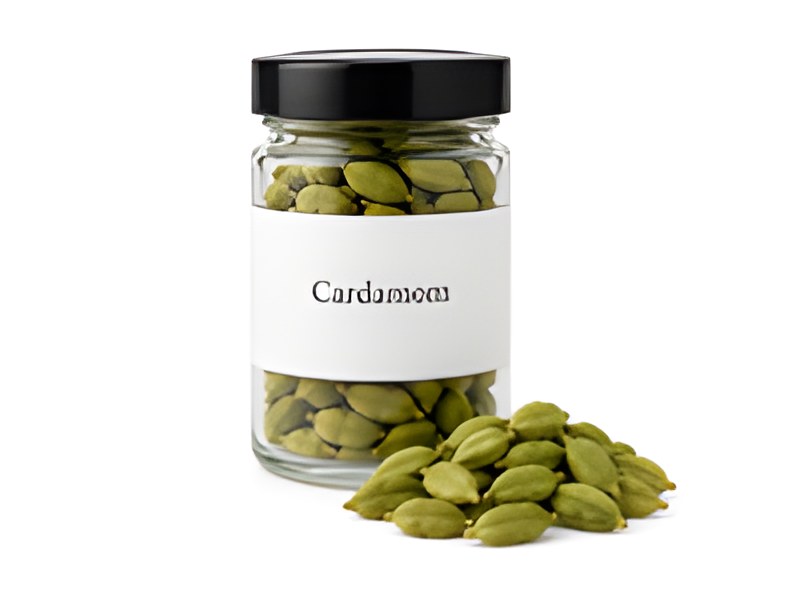
Cardamom (Elettaria cardamomum), often called green or small cardamom, is a perennial in the ginger family grown for its aromatic seed pods. Here's a brief overview of the plant, the chemistry of its seeds, and what it takes to grow one in a hydroponic or indoor setup.
What Cardamom Is
NC State Extension calls cardamom "an aromatic evergreen member of the Ginger family," with "smooth, glossy evergreen leaves" that can reach 24 inches long. In the tropics it is a robust clump-forming herb that can reach 5 m; branched rhizomes send up 10-20 leafy shoots, and the flower stalks lie along the ground, carrying white flowers with a violet-streaked lip (PROSEA).
The spice is the fruit: a three-chambered capsule, usually 1-2 cm long, pale green when fresh. Each pod holds 15-20 dark brown, aromatic seeds about 3 mm long (PROSEA). Cardamom grows wild in forest gaps in the evergreen mountain forests of the Western Ghats of southern India and the highlands of Sri Lanka, and Guatemala became a major producer after it was introduced there in the 1920s (PROSEA).
Nutritional Profile of Cardamom
The USDA record for ground cardamom (NDB 2006) lists, per 100 g, 311 calories, 10.76 g protein, 6.7 g fat and 68.47 g carbohydrate. A tablespoon (6 g) holds about 2 g fiber, 20 mg calcium, 0.8 mg iron, 15 mg magnesium, 60 mg potassium and 1.6 mg manganese (USDA data via ReciPal). Cardamom is used by the pinch, so a serving adds little to a day's food.
Nothing on this page is health or medical advice.
Chemistry of Cardamom
Whole cardamom fruits hold 3.5-7% essential oil; freshly harvested seeds can reach 11%, while the husks rarely pass 1% (PROSEA). That is why recipes call for the seeds, and why whole pods keep their flavor longer than ground cardamom.
The two main compounds in the oil are 1,8-cineole (20-60%) and α-terpinyl acetate (20-53%). The balance between them varies a lot: one Indian oil tested 38.8% cineole and 24.6% α-terpinyl acetate, another 24.7% and 49.0% (PROSEA).
Hydroponics of Cardamom
What the Research Shows
We found no published hydroponic study of green cardamom. The closest is a 2026 Thai study that grew cardamom in pots in a closed greenhouse with automatic control of irrigation and of the nutrient solution, held at EC 2.5 mS/cm and pH 5.5-6.5. The researchers compared three soilless mixes; a 50:50 mix of coconut husk chips and oil palm fiber gave the best growth, the most shoots (15.2 per pot) and the fewest rotten shoots (0.46 per pot, 3.09%) (Muysee, Jitsattha & Chanthasit, 2026). One caution: the paper uses only the Thai name กระวาน (krawan) and gives no scientific name, so it may be a Thai cardamom rather than the green cardamom on this page. It still shows the plant group can be grown in a coir-type medium fed by a managed nutrient solution, and that rot at the base is the problem to watch.
For a home system, that points to a chunky, free-draining medium (coco chips rather than a deep-water raft) and steady moisture without standing water. NC State Extension gives a soil pH of 5.5 to 6.8, and PROSEA notes the plant "does not tolerate waterlogging."
Starting Plants
Dividing the knobby rhizomes is the easy way to start a plant (NC State Extension; PROSEA). Seed is harder: it stays viable for only 7-10 days after harvest (PROSEA), so the RHS advises sowing it "with heat as soon as it is ripe." Store-bought dried pods are not a practical seed source. Start from a nursery plant or a division.
Light, Heat and Humidity
Cardamom is a shade plant. NC State lists dappled sun to deep shade and warns that "direct sunlight and sudden changes in environmental conditions must be avoided"; PROSEA puts the optimum at about 50% shade, and the RHS advises "bright, filtered light" under glass. Under grow lights, that means a gentler setting than you would give basil.
It likes warmth and moist air: NC State gives 65-95°F and about 75% humidity, and says temperatures below 50°F cause damage. In its home range the optimum mean temperature is about 22°C, and plants do not grow where the annual mean is below 17°C (PROSEA). For feeding, NC State suggests a high-nitrogen, low-potassium houseplant fertilizer twice a month.
Space and Timing
Indoors, a plant "can reach 10' in height in 5-10 years" (NC State Extension); the RHS gives 1.5-2.5 m as a container plant. This is a long-term crop. In plantations, the first small harvest comes about 3 years after field planting, or 4-5 years after sowing (PROSEA).
Will It Make Pods Indoors?
Be ready for a foliage plant. NC State says "plants will not bloom when grown indoors," and the RHS says cardamom "requires tropical conditions to fruit well, but can make a good foliage plant under glass." It is also self-sterile, so plantations plant several clones (PROSEA). The leaves are fragrant when crushed, so even a plant without pods earns its spot.
Harvest Tips
If your plant does fruit, pick each pod by hand when it is fully grown but still green and the seeds inside have turned from white to brown or black, taking care not to bruise it. Growers wash the pods, clip the stalks, and dry them from about 75% moisture down to 13% for storage (PROSEA). At home, dry them somewhere warm and airy, out of direct sun, to keep the green color.
References
- Muysee, K., Jitsattha, N., & Chanthasit, K. (2026). Effect of planting materials under automatic control system in a closed greenhouse on the topic of cardamom. Advanced Science Journal, 26(1), 236-262. Retrieved from https://li02.tci-thaijo.org/index.php/adscij/article/view/1134
- NC State Extension. (n.d.). Elettaria cardamomum (green cardamom). North Carolina Extension Gardener Plant Toolbox. Retrieved from https://plants.ces.ncsu.edu/plants/elettaria-cardamomum/common-name/green-cardamom/
- PROSEA. (n.d.). Elettaria cardamomum (PROSEA). Pl@ntUse. Retrieved from https://uses.plantnet-project.org/en/Elettaria_cardamomum_%28PROSEA%29
- ReciPal. (n.d.). Spices, cardamom: nutrition facts (USDA NDB 2006). Retrieved from https://www.recipal.com/ingredients/286-nutrition-facts-calories-protein-carbs-fat-spices-cardamom
- Royal Horticultural Society. (n.d.). Elettaria cardamomum (cardamom). Retrieved from https://www.rhs.org.uk/plants/57401/wd/details
Keep reading

Growing Chilli Hydroponically
Chilli is native to Latin America, particularly Mexico. Then came the age of exploration, and many cultivars of chilli spread across the globe. Now, chilli is a popular cooking ingredient to add…

Growing Nutmeg Hydroponically
Nutmeg’s walnut-like appearance is often deceiving. Unlike the dry fruit counterpart, nutmeg is a seed whose fruit is also a source of a couple more spices. Here’s a brief overview of nutmeg’s…

Growing Ginger Hydroponically
Ginger is much more than a culinary spice. For ages, its underground rhizome has been an integral part of eastern medicine. An overview of this folk remedy and one of the whole…