
Home / The Dirt / Hydroponic spices / Growing Cumin Hydroponically
Growing Cumin Hydroponically
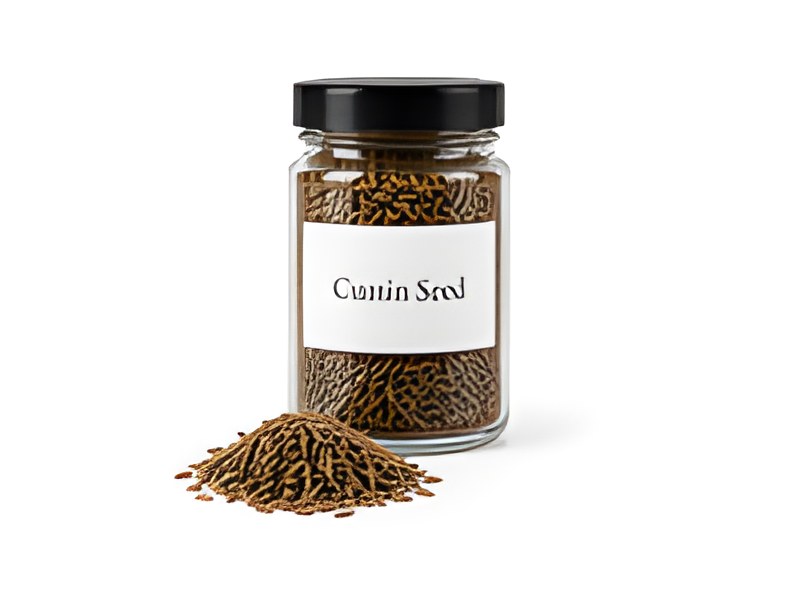
Cumin (Cuminum cyminum) is the warm, smoky seed behind chili powders, curries and taco seasoning, and one of the ten spices in our Oracle of Spice blend. Don't confuse it with black cumin (Nigella sativa), which is a different plant with its own article. Here's a brief overview of cumin's nutrition, its chemistry, and how it is grown.
Nutritional Profile of Cumin
The figures below are for 100 grams of cumin seed, from the USDA's FoodData Central (SR Legacy record 170923). A teaspoon is only a few grams, so a serving gives a small fraction of these amounts. (FoodData Central, 2026)
Carbohydrates and Fiber
Cumin seed is 44.2 g carbohydrate per 100 g, with 10.5 g of dietary fiber.
Protein and Fat
It holds 17.8 g of protein and 22.3 g of fat per 100 g, much of it in the seed's oils.
Minerals
Per 100 g, cumin seed lists 1,788 mg potassium, 931 mg calcium, 499 mg phosphorus, 366 mg magnesium, 66.4 mg iron, 4.8 mg zinc and 3.33 mg manganese.
Chemistry of Cumin
Cumin belongs to the Apiaceae family, the same family as carrots, parsley, fennel and caraway. (Allaq et al., 2020)
Its smell comes from the seed's essential oil. The oil "primarily contain[s] hydrocarbons and aldehydes," and its signature aroma is linked to cuminaldehyde (also called cuminol), which makes up "2.5 – 4.0% of the seed." (Allaq et al., 2020)
Toasting whole seeds in a dry pan before grinding is a common kitchen step because heat releases more of that aroma.
Researchers study cumin's compounds for many reasons. That research is ongoing, and nothing on this page is health or medical advice.
Growing Cumin
Cumin is a small annual plant, grown for its seed. It is "native to and cultivated extensively in several places, mainly in arid and semi-arid climates." (Allaq et al., 2020)
Hydroponic System
We did not find a published study of cumin grown fully hydroponically. The closest research is on protected cultivation. A trial at India's National Research Centre on Seed Spices compared tunnels and irrigation methods: the insect-proof net tunnel gave the tallest plants and the highest seed yield, and low-pressure drip irrigation did best among the irrigation methods. (Lal et al., 2011) A drip system in a protected space is the nearest match for an indoor grower.
Germination
Cumin seed can be slow to come up. In a 2023 field study, soaking the seed in water for 12 hours "had a notable effect on the plant emerging and seed yield," and soaking longer did not help. (Moradi et al., 2023)
Light and Water
As a dry-climate plant, cumin prefers bright light and does not like sitting wet. In a soilless setup, an inert medium with good drainage and drip feeding suits it better than roots held in standing water. (Estimate based on the climate notes above; no hydroponic trial was found.)
Cumin is the smoky backbone of the Oracle of Spice blend, next to garlic and black pepper.
References
- FoodData Central. (2026, April 30). Spices, cumin seed (SR Legacy, FDC ID 170923). U.S. Department of Agriculture. Values as displayed at https://getfoodfacts.com/food/spices-cumin-seed-170923
- Allaq, A. A., Sidik, N. J., Abdul-Aziz, A., & Ahmed, I. A. (2020). Cumin (Cuminum cyminum L.): A review of its ethnopharmacology, phytochemistry. Biomedical Research and Therapy, 7(9), 4016-4021. doi:https://doi.org/10.15419/bmrat.v7i9.634
- Lal, G., Meena, S. S., Maheria, S. P., Mehta, R. S., & Anwer, M. M. (2011). Growth and yield of cumin (Cuminum cyminum L.) as influenced by irrigation methods and protected cultivation practices. International Journal of Seed Spices, 1(1), 13-17. Retrieved from https://krishi.icar.gov.in/jspui/handle/123456789/19416
- Moradi, R., Saeidnejad, A. H., & Ziaei, S. M. (2023). Investigating the Effect of Cultivation Method and Pre-Soaking of Seed on Seed and Essential oil Yield of Cumin (Cuminum cyminum L.) Under Dry Farming. Iranian Journal of Horticultural Science, 54(4), 627-641. doi:https://doi.org/10.22059/ijhs.2023.354315.2086
Keep reading

Growing Chilli Hydroponically
Chilli is native to Latin America, particularly Mexico. Then came the age of exploration, and many cultivars of chilli spread across the globe. Now, chilli is a popular cooking ingredient to add…

Growing Nutmeg Hydroponically
Nutmeg’s walnut-like appearance is often deceiving. Unlike the dry fruit counterpart, nutmeg is a seed whose fruit is also a source of a couple more spices. Here’s a brief overview of nutmeg’s…

Growing Ginger Hydroponically
Ginger is much more than a culinary spice. For ages, its underground rhizome has been an integral part of eastern medicine. An overview of this folk remedy and one of the whole…