
Home / The Dirt / Hydroponic spices / Growing Fenugreek Hydroponically
Growing Fenugreek Hydroponically
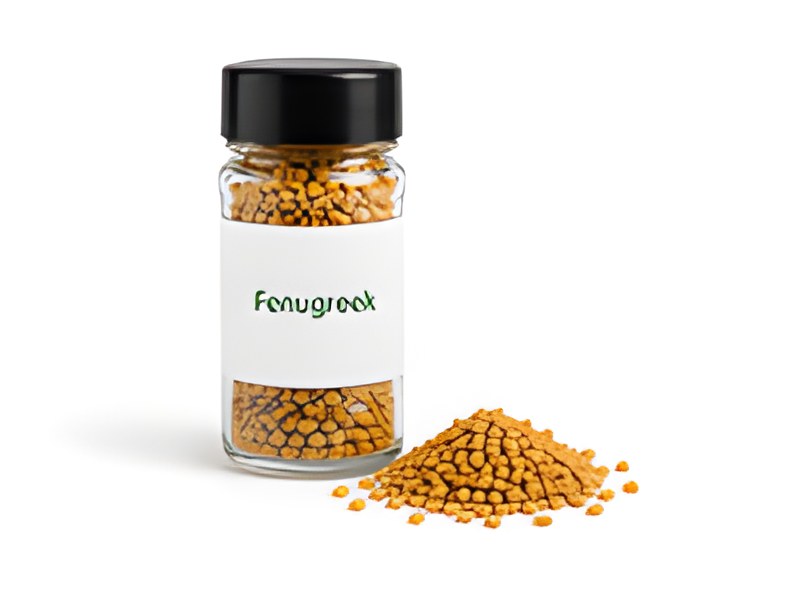
Fenugreek (Trigonella foenum-graecum) is a small legume grown for two things: its hard, brownish seeds, a spice in curry powders and spice blends, and its leaves, which are eaten as a vegetable. Here's a brief overview of its nutrition, its chemistry, and what research has found when it was grown without soil.
What Fenugreek Is
Fenugreek is "an erect, stiff, strongly scented, annual herb, up to 60 cm tall" (PROSEA). It belongs to the pea family. Its leaves have three leaflets, its pale yellow to white flowers sit singly where the leaves meet the stem, and its long, thin pods hold 10-20 seeds each. The seeds are 3-5 mm long and brownish (PROSEA).
It is "probably indigenous to the eastern Mediterranean, western Asia and India" and has been grown since ancient times (PROSEA).
In the kitchen, the seeds are used whole, ground or roasted in spice blends and curry powders, and roasted seeds have been used as a coffee substitute. "In India the leaves are important as vegetable and condiment in spite of their bitter taste," and sprouted seedlings are eaten as a vegetable in Egypt and parts of Asia (PROSEA).
Nutritional Profile of Fenugreek
The figures below are for 100 grams of fenugreek seed, from the USDA's FoodData Central (SR Legacy record 171324). A teaspoon is only a few grams, so a serving gives a small fraction of these amounts. (FoodData Central, 2026)
Carbohydrates and Fiber
100 g of fenugreek seed has 58.4 g of carbohydrate, of which 24.6 g is fiber. Energy is 323 kcal.
Protein and Fat
As a legume seed, fenugreek is high in protein for a spice: 23.0 g per 100 g, with 6.41 g of fat.
Minerals
Per 100 g: iron 33.5 mg, potassium 770 mg, phosphorus 296 mg, magnesium 191 mg, calcium 176 mg, zinc 2.50 mg, manganese 1.23 mg and copper 1.11 mg.
Chemistry of Fenugreek
Fenugreek's smell comes from a compound called sotolon. It is only a minor part of the seed, but PROSEA calls it "responsible for the characteristic curry aroma of fenugreek."
The seeds also contain trigonelline, an alkaloid named after the plant, and a mucilage (the gel that forms when the seeds are soaked) made of a galactomannan, which is used in industry (PROSEA).
Nothing on this page is health or medical advice.
Hydroponics of Fenugreek
Hydroponic System
Fenugreek has been grown in a closed-loop rotary hydroponic system: a slowly turning cylinder of plants around a central LED grow light, with software watching the nutrient solution (Kadam, Kadam & Mohite, 2024).
Nutrient Solution
That system used a custom mix supplying nitrogen, phosphorus, potassium, calcium and magnesium, kept at a pH of 5.5 to 6.5 (Kadam, Kadam & Mohite, 2024).
Germination and Growth
PROSEA gives germination at 4-5 days. In the rotary study, the first 18-20 days were spent in a nursery for germination and early growth. After transplanting, the plants were 12-15 cm tall by day 20 and 15-20 cm by day 30, when the authors counted them as fully grown and ready to harvest (Kadam, Kadam & Mohite, 2024).
Microgreens
Fenugreek is also grown as a microgreen, cut young from a tray. A 2026 study compared four growing media and found that cocopeat, a soilless coconut-fibre medium, gave the highest germination (85.65%) and yield. It also found that 25 g of seed per tray was the best density: "30 g reduced performance due to competition" (Mushtaq et al., 2026).
Growing for Seed
Seed is a much longer crop. In the field, fenugreek is harvested for seed "3-5 months after planting by uprooting," and the plants are hung upside down to dry in a warm, shady place (PROSEA). It likes sun, and in warm climates it is grown as a cool-season crop (PROSEA).
References
- FoodData Central. (2026, April 30). Spices, fenugreek seed (SR Legacy, FDC ID 171324). U.S. Department of Agriculture. Values as displayed at https://getfoodfacts.com/food/spices-fenugreek-seed-171324
- Tawan, C. S., & Wulijarni-Soetjipto, N. (n.d.). Trigonella foenum-graecum (PROSEA). PlantUse English. Retrieved from https://uses.plantnet-project.org/en/Trigonella_foenum-graecum_%28PROSEA%29
- Kadam, S. A., Kadam, P. S., & Mohite, D. D. (2024). Design and experimental analysis of a closed-loop autonomous rotary hydroponics system for revolutionizing fenugreek yield and enhancing food security. Discover Sustainability, 5, 137. doi:https://doi.org/10.1007/s43621-024-00339-7
- Mushtaq, I., Khan, F. A., Bhat, S. A., Narayan, S., Murtaza, I., Kirmani, N. A., Dar, Z. M., Mir, S. A., Hussain, S., Astha, & Khan, U. W. (2026). Effect of growing media and seed density on growth, yield and quality of fenugreek (Trigonella foenum-graecum) microgreens. The Indian Journal of Agricultural Sciences, 96(6), 828-831. doi:https://doi.org/10.56093/ijas.v96i6.171592
Keep reading

Growing Chilli Hydroponically
Chilli is native to Latin America, particularly Mexico. Then came the age of exploration, and many cultivars of chilli spread across the globe. Now, chilli is a popular cooking ingredient to add…

Growing Nutmeg Hydroponically
Nutmeg’s walnut-like appearance is often deceiving. Unlike the dry fruit counterpart, nutmeg is a seed whose fruit is also a source of a couple more spices. Here’s a brief overview of nutmeg’s…

Growing Ginger Hydroponically
Ginger is much more than a culinary spice. For ages, its underground rhizome has been an integral part of eastern medicine. An overview of this folk remedy and one of the whole…