
Home / The Dirt / Hydroponic greens and vegetables / Growing Kale Hydroponically
Growing Kale Hydroponically
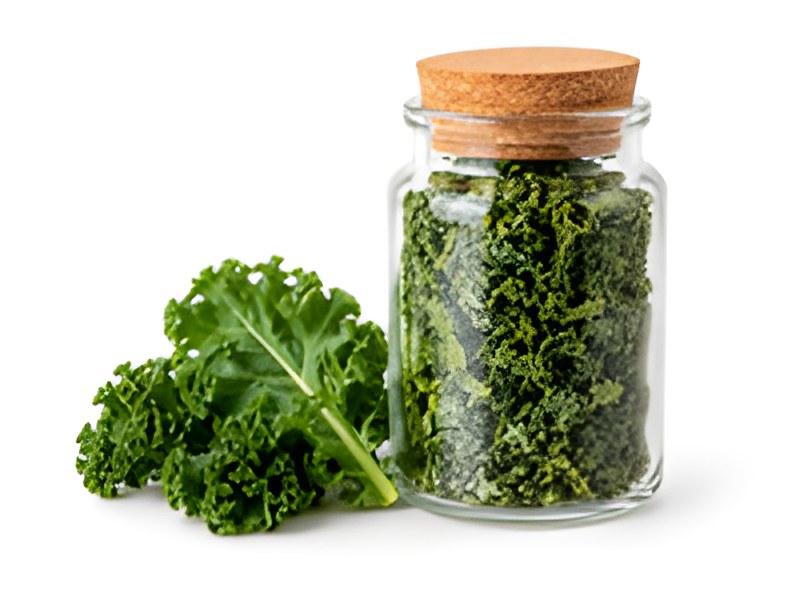
Kale is a cabbage that never forms a head. You pick its leaves from the bottom up, and the plant keeps making more. It grows well in channels, buckets and coir bags, and it has more hydroponic trials behind it than most of the leafy greens on this site. Here's a brief overview of the plant and what the trials report.
What Kale Is
University of Arkansas Extension names kale Brassica oleracea acephala, a cool-season green, and lists Vates, Red Russian, Improved Dwarf Siberian, Winterbor, Dwarf Blue and Green Lance among its cultivars, plus flower-like ornamental kales (Andersen, UA FSA6069). Names in papers vary: a 2020 Argentine storage study files curly kale as Brassica oleracea var. sabellica (Casajús et al., 2020), and a 2019 Guelph microgreen study lists 'Red Russian' under Brassica napus, a different species (Jones-Baumgardt et al., 2019). If you buy Red Russian seed, expect to see either name.
Nutritional Profile of Kale
USDA's SR Legacy record for raw kale (FDC 168421, via GetFoodFacts) lists, per 100 g, about 35 kcal, 89.6 g water, 2.9 g protein, 4.1 g fiber, 93 mg vitamin C, 390 µg vitamin K, 241 µg vitamin A (RAE), 254 mg calcium and 348 mg potassium (GetFoodFacts, USDA FDC 168421). Nothing on this page is health or medical advice.
Hydroponics of Kale
What the Research Shows
Varieties in a soilless trial. At the University of Florida's North Florida Research and Education Center in Live Oak, eight kale cultivars were grown in 2015 in coconut coir grow bags under 30% shade cloth, drip-fed a solution at pH 5.8 and EC about 2.0, with plants 6 inches apart. Over six harvests from April to July, Winterbor (21.9 lb per plot) and Red Russian (21.8 lb) gave the highest total yields, ahead of Nero di Toscano (16.2 lb), with Maribor lowest (10.8 lb). Winterbor and Red Russian also led the first two harvests (Hochmuth et al., 2015).
Feed in the last week. At Ohio State's Wooster campus, a 2022 greenhouse trial grew 'Red Russian' kale in NFT channels at EC 1.8 and pH 5.8 under 16 hours of light (natural plus HPS, about 22 mol/m²/day), with days near 24 °C and nights near 17 °C. For the final week before harvest (four weeks after transplant), switching half the channels to calcium nitrate alone, instead of the full two-part feed, gave 28.5% more shoot fresh weight and 21.8% more leaf area. The same switch tripled leaf nitrate (from about 865 to 2,481 mg/kg fresh weight, which the authors note is below EU limits), cut vitamin C by 24% and red anthocyanins by 36%, and raised glucosinolates by 13% (Yang, Samarakoon & Altland, 2025). So the switch bought weight at some cost to color and leaf quality.
Greenhouse systems against a container farm. A 2024 University of Tennessee thesis grew 'Toscano' kale for a full year in ebb and flood, NFT and deep water culture in a greenhouse, and in a shipping container farm under LEDs (20-hour days), all on the same nutrient solution and harvested at the twelfth leaf. The container farm grew about twice as much kale as the three greenhouse systems put together, but needed about twice the labor per week and the most energy in hot months for cooling. Among the greenhouse systems, NFT plants had the highest percent dry matter (Rector, 2024). The abstract gives no EC or pH.
Light for microgreens. Under sole-source LEDs at the University of Guelph, 'Red Russian' microgreens grown in trays under 100 to 600 µmol/m²/s (16 hours a day) gained 36% more fresh weight at the top light level, with gains leveling off as light rose, and had shorter stems and deeper color. They were harvested 10 days after sowing (Jones-Baumgardt et al., 2019). This was a peat-compost-coir tray mix, not a nutrient solution.
Our reading: EC 1.8-2.0 and pH 5.8 is what both the NFT and the coir-bag trials used, and Red Russian or Winterbor are good picks if you want the most leaf. Changing the feed in the last week can add weight, but it changes the leaf too.
Temperature
Arkansas Extension calls kale a cool-season crop that grows best in spring and fall but tolerates summer heat. It says quality improves with frost and the plant can take a light freeze (Andersen, UA FSA6069). The Ohio NFT trial ran at about 24 °C days and 17 °C nights (Yang, Samarakoon & Altland, 2025).
Spacing
Arkansas Extension thins garden kale to 8-12 inches apart (Andersen, UA FSA6069). The Florida coir-bag trial set plants 6 inches apart within each bag, in double rows 4 feet apart center to center (Hochmuth et al., 2015).
Harvest
Arkansas Extension lists days to maturity from 40 (Red Russian) and 45 (Dwarf Blue) to 52-58 for Winterbor, Vates, Green Lance and Improved Dwarf Siberian. Pick the lower leaves one at a time while they are small and tender, 8-10 inches or shorter, or cut the whole plant (Andersen, UA FSA6069). The Florida trial took six harvests over about three months from the same plants (Hochmuth et al., 2015).
Storage
A study from Argentina's INFIVE (CONICET) found that kale leaves cut in the evening, at 18:00, yellowed later in storage and lost less chlorophyll and protein than leaves cut earlier in the day (Casajús et al., 2020). If you can choose, pick late in the day.
References
- Andersen, C. R. Home Gardening Series: Kale. University of Arkansas Division of Agriculture, FSA6069. Retrieved from https://www.uaex.uada.edu/publications/PDF/FSA-6069.pdf
- Casajús, V., Ramos, R., Barriga Lourenco, A., Civello, M., Martínez, G., Perini, M., Fanello, D., Frezza, D., & Sánchez, E. (2020). Harvesting at the end of the day extends postharvest life in kale (Brassica oleracea var. sabellica). Scientia Horticulturae. DOI 10.1016/j.scienta.2020.109757. Summary retrieved from https://infive.conicet.gov.ar/harvesting-at-the-end-of-the-day-extends-postharvest-life-in-kale/
- GetFoodFacts. Kale, raw (USDA FoodData Central SR Legacy, FDC 168421). Retrieved from https://getfoodfacts.com/food/kale-raw-168421
- Hochmuth, R. C., Laughlin, W. L., Parkell, N. B., & Martin, B. (2015). Evaluation of Eight Kale Cultivars Grown Under an Open Shaded Structure in North Florida. UF/IFAS Suwannee Valley Agricultural Extension Center. Retrieved from https://svaec.ifas.ufl.edu/media/svaecifasufledu/docs/word-now-pdf/svreports/leafygreens/Kale-Report-2015-final-doc_March2022.pdf
- Jones-Baumgardt, C., Llewellyn, D., Ying, Q., & Zheng, Y. (2019). Intensity of sole-source light-emitting diodes affects growth, yield, and quality of Brassicaceae microgreens. HortScience, 54(7), 1168-1174. DOI 10.21273/HORTSCI13788-18. Retrieved from https://journals.ashs.org/downloadpdf/view/journals/hortsci/54/7/article-p1168.pdf
- Rector, K. N. (2024). Kale (Brassica oleracea var. acephala) Production Efficiency, Yield, and Quality When Hydroponically Grown in a Greenhouse and Shipping Container Farm. Master's thesis, University of Tennessee. Retrieved from https://trace.tennessee.edu/utk_gradthes/12826
- Yang, T., Samarakoon, U., & Altland, J. (2025). Modified nutrient management protocol for optimum biomass production [title shortened; full title at the DOI]. Frontiers in Plant Science, 16, 1629432. DOI 10.3389/fpls.2025.1629432. Retrieved from https://www.frontiersin.org/journals/plant-science/articles/10.3389/fpls.2025.1629432/pdf
Keep reading
Growing Onions Hydroponically
In the scientific community, onion goes by the name of Allium cepa. Onion is more commonly known as a culinary and therapeutic spice in the kitchen when crushed into powdered form. The…

Growing Pepper Hydroponically
Pepper family is normally consumed as a spice. But, in some cultures, its fruit is used as whole foods. The family has well over 25 members, but this discussion is limited to…

Growing Celery Hydroponically
Celery belongs to the same family as one of the most common whole foods, carrots. From stalk to leaves, every part of celery is edible and often used as a spice for…