
Home / The Dirt / Hydroponic herbs / Growing Catnip Hydroponically
Growing Catnip Hydroponically
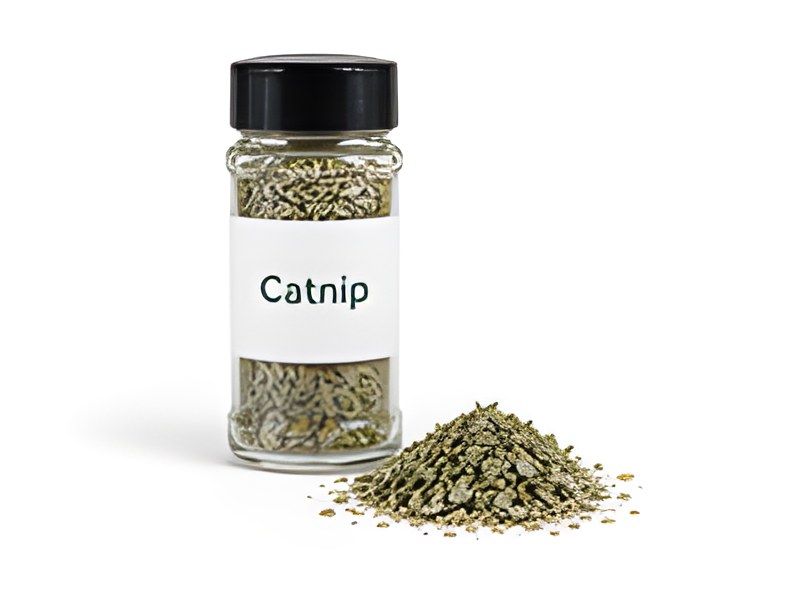
Catnip (Nepeta cataria) is a hardy, strong-smelling member of the mint family. Most people grow it for their cats. Here's a brief overview of the plant, the chemistry behind its smell, and what research has found when it was grown in a hydroponic system.
What Catnip Is
Catnip is a perennial, usually "1 to 3 feet tall," with the square, branched, hairy stems typical of mints (Ohio State University Weed Guide). Its leaves come in pairs, are triangular to heart-shaped with saw-toothed edges, and look whitish underneath from dense hairs. Crushed or wilted leaves give off a minty smell (Ohio State University Weed Guide).
The flowers are about half an inch long, white to pale lavender with purple spots, in "dense whorled clusters" at the ends of the stems. It flowers from June through October and spreads by seed and by short underground rhizomes (Ohio State University Weed Guide).
Its origin is uncertain, possibly Europe or Asia. It came to North America from Europe and now grows wild across the northern U.S. and Canada, along roadsides, fence rows and stream banks (Ohio State University Weed Guide).
The Royal Horticultural Society rates it H7, its hardiest rating, lists it as drought resistant and as a plant for pollinators, and describes its greyish-green leaves as "strongly aromatic and attractive to cats" (RHS).
Nutritional Profile of Catnip
We could not find a USDA FoodData Central record for catnip, so we can't give the usual per-100-gram figures. The USDA's Dr. Duke's Phytochemical and Ethnobotanical Databases list niacin among catnip's reported compounds, but without an amount (USDA Dr. Duke's databases). Catnip is grown for its smell, not as a food.
Chemistry of Catnip
Catnip's signature compound is nepetalactone, a major part of its essential oil (Said-Al Ahl, Sabra & Hegazy, 2016). The USDA's Dr. Duke's databases also list myrcene, nerol, nepetalic acid and myristic acid among the compounds reported in the plant (USDA Dr. Duke's databases).
Why Cats React
A 2021 study in Science Advances, from Iwate, Nagoya, Kyoto and Liverpool universities, looked at why cats rub their faces and roll on these plants. It found the response is tied to the cats' opioid system and raises their β-endorphin levels. Cats whose fur was coated in nepetalactol, the related compound in silver vine, attracted significantly fewer mosquitoes than untreated cats. The lead researcher called it a "chemical defence against mosquitoes" (University of Liverpool, 2021).
Nothing on this page is health, medical or veterinary advice.
Hydroponics of Catnip
Hydroponic System
Researchers at Rutgers grew the catnip cultivar 'CR9' in 24-site hydroponic units, each holding 2 gallons (7.57 L) of nutrient solution, with twelve plants per unit held in neoprene collars (Allen et al., 2024).
Nutrient Solution
The plants grew in half-strength Hoagland's solution, a standard hydroponic nutrient recipe, kept at a pH of 5.8 to 6.0 (Allen et al., 2024).
Starting the Plants
Seeds were started in plug flats. At about 7 weeks, when the seedlings had four pairs of leaves, the soil was rinsed off the roots and they went into the hydroponic units, where they grew for 8 weeks (Allen et al., 2024).
Light and Temperature
The greenhouse was kept at 20-23 °C (68-73 °F), about 58% relative humidity, with 16 hours of light and 8 hours of dark each day (Allen et al., 2024).
Nepetalactone in Hydroponic Catnip
The hydroponic plants averaged 1.23% (Z,E)-nepetalactone by dry weight. In that study, adding salicylic acid to the solution for 24 hours switched on two genes in the nepetalactone pathway but did not change plant weight or nepetalactone levels in that time (Allen et al., 2024).
Water and Smell
A two-season pot study in soil found that drier conditions cut plant growth and total oil yield, but raised the share of oil in the plant and the share of nepetalactone in that oil, which peaked at 42.5% in the driest treatment (Said-Al Ahl, Sabra & Hegazy, 2016). The study was in soil, not hydroponics, so how this carries over to a nutrient solution is not known.
Care
Catnip wants full sun. The RHS suggests trimming it after flowering to keep it compact, and notes it can get powdery mildew in dry summers (RHS).
References
- Allen, K. A., Gomes, E. N., Lockhart, A., Wu, Q., Di, R., … Simon, J. E. (2024). Short-term salicylic acid application induces the expression of GPPS and NEPS1 in catnip. Theoretical and Experimental Plant Physiology, 36(2), 299-312. doi:https://doi.org/10.1007/s40626-024-00322-7
- Ohio State University. (n.d.). Catnip (Nepeta cataria). Ohio Perennial and Biennial Weed Guide. Retrieved from https://weedguide.cfaes.osu.edu/singlerecord.asp?id=22
- Royal Horticultural Society. (n.d.). Nepeta cataria. Retrieved from https://www.rhs.org.uk/Plants/81198/wd/Details
- Said-Al Ahl, H. A. H., Sabra, A. S., & Hegazy, M. H. (2016). Salicylic acid improves growth and essential oil accumulation in two Nepeta cataria chemotypes under water stress conditions. Italian Journal of Agrometeorology, 1/2016, 25-36. Retrieved from https://www.agrometeorologia.it/wp-content/uploads/2024/06/2016_1_02_said-al-ahl_p-25-36.pdf
- University of Liverpool. (2021). Cats' love of catnip helps protect against mosquitoes. Retrieved from https://news.liverpool.ac.uk/?p=97950
- U.S. Department of Agriculture. (n.d.). Nepeta cataria. Dr. Duke's Phytochemical and Ethnobotanical Databases. Retrieved from https://phytochem.nal.usda.gov/plant-nepeta-cataria
Keep reading
Growing Basil Hydroponically
Basil is essentially a herb. But it’s frequently used as a spice in kitchens because of its aroma and peppery taste. Basil is an essential ingredient in Italian and Indian culinary preparations…
Growing Parsley Hydroponically
Native to the eastern Mediterranean region, parsley is now widely used in European and American cuisine. Its leaves are either utilized fresh or dried to form spice. Sometimes, it’s partnered up with…
Growing Thyme Hydroponically
Thyme is a perennial herb that’s rich in nutrition as well as taste. And both these qualities are responsible for their culinary and medicinal uses. Here’s a brief overview of their chemistry…