
Home / The Dirt / Hydroponic herbs / Growing Chamomile Hydroponically
Growing Chamomile Hydroponically
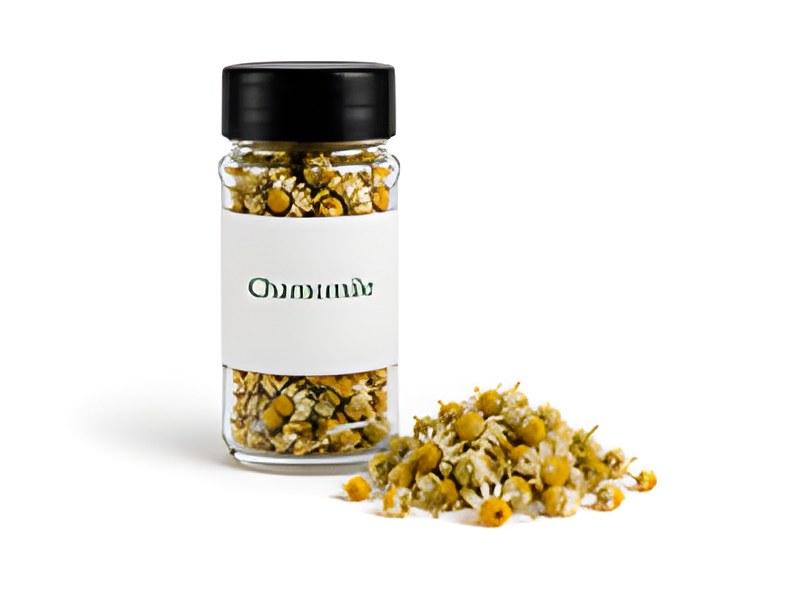
German chamomile (Matricaria chamomilla, also called Matricaria recutita) is a fast-growing annual in the daisy family, grown mostly for its flowers. Here's a brief overview of the plant, the chemistry of its flowers, and what researchers found when they grew it in a hydroponic vertical farm.
What Chamomile Is
German chamomile is an annual that "grows quickly from seed to produce erect, branched stems up to 2 feet tall" (University of Wisconsin-Madison Extension). Its leaves are finely divided and feathery, 0.5 to 3 inches long (NC State Extension).
Each flower head has "a domed central cone of bright golden yellow tubular florets surrounded by 10 to 25 white ray flowers," and the flowers have "a strong, aromatic apple-like fragrance" that draws bees and butterflies (University of Wisconsin-Madison Extension). It blooms from early summer into fall (NC State Extension).
It is native to "Macaronesia, North Africa, and temperate Eurasia to Indo-China" (NC State Extension) and has naturalized in the Americas, central Asia and Australia. Argentina, Egypt and Hungary are major producers (PROSEA).
Don't confuse it with Roman chamomile (Chamaemelum nobile), a shorter perennial from western Europe that is used less for tea because it tastes more bitter (University of Wisconsin-Madison Extension).
NC State Extension lists German chamomile as "toxic to dogs, cats, and horses," so keep pets away from the plants.
Nutritional Profile of Chamomile
Chamomile is used as a tea, not eaten as a food. The USDA record for brewed chamomile tea (NDB 14545) lists about 1 calorie, 0.2 g carbohydrate, 0 g fat and 0 g protein per 100 g (USDA data via ReciPal). In other words, a cup of chamomile tea is almost all water.
Chemistry of Chamomile
The flower heads hold 0.3-1.5% essential oil. Freshly distilled, the oil is blue, then turns green and brown with light and air. The blue comes from chamazulene, which forms from a compound in the flowers called matricin. Bisabolol and its oxides make up "more than 50%" of the oil (PROSEA).
The flowers also carry flavonoids, concentrated in the white ray flowers, including apigenin, luteolin and quercetin (PROSEA).
How much of each compound a plant makes varies with how it's grown. In a soil field trial in Iran, chamazulene reached 6.40% of the oil in one fertilizer treatment, and the best treatment gave 456 kg of dry flowers per hectare (Gandomi et al., 2021).
Nothing on this page is health or medical advice.
Hydroponics of Chamomile
Hydroponic System
At the University of Georgia, Maynard and colleagues grew two chamomile cultivars, 'Bodegold' and 'Zloty Lan', in an indoor vertical farm using deep-water culture: net pots in foam rafts floating on 60 x 60 x 10 cm containers of nutrient solution, on four stacked shelves. An air pump and air stone kept the solution oxygenated (Maynard, 2025; Maynard et al., 2024).
Nutrient Solution
The plants were fed Jack's Hydro FeED (16-1.8-14.3), with electrical conductivity raised from 0.75 to 1.5 dS/m over the first 4 weeks. The pH was held at 6.0 to 6.5 (Maynard, 2025).
Light and Temperature
The plants grew only under LEDs, 30.5 cm above the rafts, with a daily light integral of 17 mol/m²/day and 16 hours of light a day, a day length chosen to make chamomile flower. The room ran 24 °C (75 °F) by day and 20 °C (68 °F) by night, at 50-75% humidity (Maynard, 2025; Maynard et al., 2024).
Starting and Harvesting
Seedlings moved into the hydroponic system 3 weeks after sowing and grew for 80 days. Flowers were picked twice a week (Maynard, 2025). Outdoors, chamomile seeds need light to germinate, so they are surface sown, and the seedlings don't transplant well, so move them while small (University of Wisconsin-Madison Extension).
What It Produced
'Bodegold' gave an average of 18.5 g of dried flowers per plant, against 4.4 g for 'Zloty Lan', and only 63% of 'Zloty Lan' plants flowered at all. Apigenin levels in the dried flowers were about the same in both, around 0.7 mg per gram (Maynard, 2025; Maynard et al., 2024). So for an indoor setup, cultivar choice mattered more than anything else measured.
An earlier study in Mexico also grew chamomile hydroponically, in volcanic rock (tezontle) and in a soil-compost-perlite mix, using Steiner solution at 75% strength. Mineral feeding improved plant growth, but total essential oil yield did not differ between treatments, because it tracked the number of fresh flowers (Juárez-Rosete et al.).
Harvest Tips
Pick the flowers near full bloom and snip just the flower head (University of Wisconsin-Madison Extension). Oil content peaks when the white ray flowers stand flat and is highest around noon on sunny days. Dry the flowers at no more than 40 °C (104 °F); drying at 55 °C can cut oil content by about 30% (PROSEA).
References
- Gandomi, A., Amiri, B., Sharafzadeh, S., Bazrafshan, F., & Hazrati, S. (2021). The response of different fertilizer applications on chamomile production and their quality characteristics. Acta Scientiarum Polonorum Hortorum Cultus, 20(2), 107-119. doi:10.24326/asphc.2021.2.11. Retrieved from https://czasopisma.up.lublin.pl/asphc/article/download/1505/2745
- Juárez-Rosete, C. R., Rodríguez-Mendoza, M. N., Trejo-Téllez, L. I., & Aguilar-Castillo, J. A. (n.d.). Inorganic and organic fertilization in biomass and essential oil production of Matricaria recutita L. Acta Horticulturae, 947, 307-311. Retrieved from https://ishs.org/ishs-article/947_39/
- Maynard, R. C. I. (2025). Accumulation of apigenin in controlled environment herbs (Doctoral dissertation, University of Georgia). Retrieved from https://openscholar.uga.edu/record/27142/files/Maynard_uga_0077E_16312.pdf
- Maynard, R. C. I., Ogundipe, S. O., Ferrarezi, R. S., Suh, J. H., & Lombardini, L. (2024). Apigenin accumulation in Matricaria chamomilla and Petroselinum crispum produced in a vertical hydroponic system. HortScience, 60(1). doi:https://doi.org/10.21273/HORTSCI18240-24
- NC State Extension. (n.d.). Matricaria chamomilla. North Carolina Extension Gardener Plant Toolbox. Retrieved from https://plants.ces.ncsu.edu/plants/all/matricaria-chamomilla/
- PROSEA. (n.d.). Matricaria recutita. Pl@ntUse. Retrieved from https://uses.plantnet-project.org/en/Matricaria_recutita_%28PROSEA%29
- ReciPal. (n.d.). Tea, herb, chamomile, brewed: nutrition facts (USDA NDB 14545). Retrieved from https://www.recipal.com/ingredients/11242-nutrition-facts-calories-protein-carbs-fat-tea-herb-chamomile-brewed
- University of Wisconsin-Madison Extension. (n.d.). Chamomile, Matricaria chamomilla. Retrieved from https://hort.extension.wisc.edu/articles/chamomile-matricaria-chamomilla
Keep reading
Growing Basil Hydroponically
Basil is essentially a herb. But it’s frequently used as a spice in kitchens because of its aroma and peppery taste. Basil is an essential ingredient in Italian and Indian culinary preparations…
Growing Parsley Hydroponically
Native to the eastern Mediterranean region, parsley is now widely used in European and American cuisine. Its leaves are either utilized fresh or dried to form spice. Sometimes, it’s partnered up with…
Growing Thyme Hydroponically
Thyme is a perennial herb that’s rich in nutrition as well as taste. And both these qualities are responsible for their culinary and medicinal uses. Here’s a brief overview of their chemistry…