
Home / The Dirt / Hydroponic herbs / Growing Dill Hydroponically
Growing Dill Hydroponically
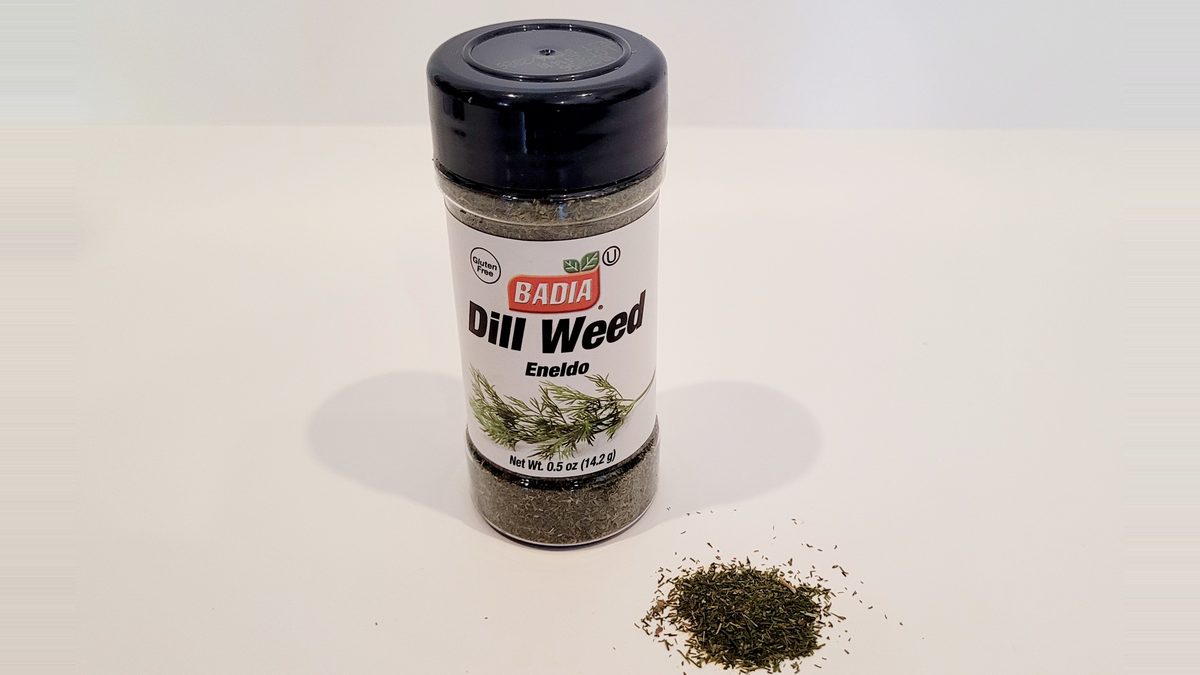
Dill (Anethum graveolens) is the feathery, blue-green herb behind dill pickles, and the seed of the same plant is a spice in its own right. Here's a brief overview of its nutrition, the chemistry behind its smell, and what one research study found when it grew dill in a hydroponic system.
What Dill Is
Dill is an "erect, annual, blue-green, glabrous herb, up to 1.5 m tall" that flowers in compound umbels, flat-topped clusters of small flowers on long stems (PROSEA). Its origin is not known for sure; it "is thought to be native to the Mediterranean" (PROSEA).
Cooks use two parts of the plant. The leaves, often sold as "dill weed", go into soups, salads and sauces, and the flower heads and ripe seeds flavour pickled cucumbers, onions, vinegar, sauces and bread (PROSEA).
Nutritional Profile of Dill
The figures below are for 100 grams of fresh dill weed, from the USDA's FoodData Central (SR Legacy record 172233). Most people use a few grams at a time, so a serving holds far less than these numbers.
Water, Carbohydrates and Fiber
Fresh dill is mostly water (86.0 g per 100 g). It has 7.02 g of carbohydrate, including 2.1 g of dietary fiber, and 43 kcal.
Protein and Fat
It holds 3.46 g of protein and 1.12 g of fat per 100 g.
Minerals and Vitamins
Per 100 g, fresh dill lists 738 mg potassium, 208 mg calcium, 66 mg phosphorus, 55 mg magnesium, 6.59 mg iron and 1.26 mg manganese, along with 85 mg vitamin C, 386 µg vitamin A (RAE) and 150 µg folate.
Chemistry of Dill
The smell of dill comes from its essential oil, and the leaves and the seeds smell different because their oils are different.
In the seed (fruit) oil, the main compounds are limonene and carvone: the PROSEA review gives ranges of "limonene (up to 70%) and carvone (up to 60%)".
The leaf ("herb") oil is led by phellandrene, about 35%, and a compound often called dill ether, about 25% (PROSEA). So the leaves and the seeds of the same plant smell different.
Nothing on this page is health or medical advice.
Hydroponics of Dill
Hydroponic System
Dill has been grown in nutrient-film technique (NFT) channels in research greenhouses. One study grew 'Fernleaf' dill, along with cilantro and parsley, in NFT troughs with the nutrient solution held at pH 6.0, for four weeks in greenhouses (Currey, Walters & Flax, 2019).
Nutrient Solution
The researchers tested five nutrient strengths, from an EC of 0.5 up to 4.0 dS/m. For dill, the strength of the solution made little difference to how much the plants grew: "Fresh and dry mass and node number for dill were affected by DLI, but not EC" (Currey, Walters & Flax, 2019).
Light Matters Most
DLI (daily light integral) is the total amount of light the plants get in a day. In the same study, dill grown under the higher light level (about 18 mol per square metre per day) gained much more fresh and dry weight than dill grown under the lower level (about 7). For an indoor grower, that suggests putting money into good light before worrying about a strong nutrient mix.
Harvesting
Cut the feathery leaves as you need them; if you want seed, let some plants flower and set seed heads instead.
References
- FoodData Central. (2026, April 30). Dill weed, fresh (SR Legacy, FDC ID 172233). U.S. Department of Agriculture. Values as displayed at https://getfoodfacts.com/food/dill-weed-fresh-172233
- Nguyen Thi Tâm, de Guzman, C. C., & Jansen, P. C. M. (n.d.). Anethum graveolens (PROSEA). PlantUse English. Retrieved from https://uses.plantnet-project.org/en/Anethum_graveolens_(PROSEA)
- Currey, C. J., Walters, K. J., & Flax, N. J. (2019). Nutrient Solution Strength Does Not Interact with the Daily Light Integral to Affect Hydroponic Cilantro, Dill, and Parsley Growth and Tissue Mineral Nutrient Concentrations. Agronomy, 9(7), 389. doi:https://doi.org/10.3390/agronomy9070389
Keep reading
Growing Basil Hydroponically
Basil is essentially a herb. But it’s frequently used as a spice in kitchens because of its aroma and peppery taste. Basil is an essential ingredient in Italian and Indian culinary preparations…
Growing Parsley Hydroponically
Native to the eastern Mediterranean region, parsley is now widely used in European and American cuisine. Its leaves are either utilized fresh or dried to form spice. Sometimes, it’s partnered up with…
Growing Thyme Hydroponically
Thyme is a perennial herb that’s rich in nutrition as well as taste. And both these qualities are responsible for their culinary and medicinal uses. Here’s a brief overview of their chemistry…