
Home / The Dirt / Hydroponic herbs / Growing Makrut Lime Leaves Hydroponically
Growing Makrut Lime Leaves Hydroponically
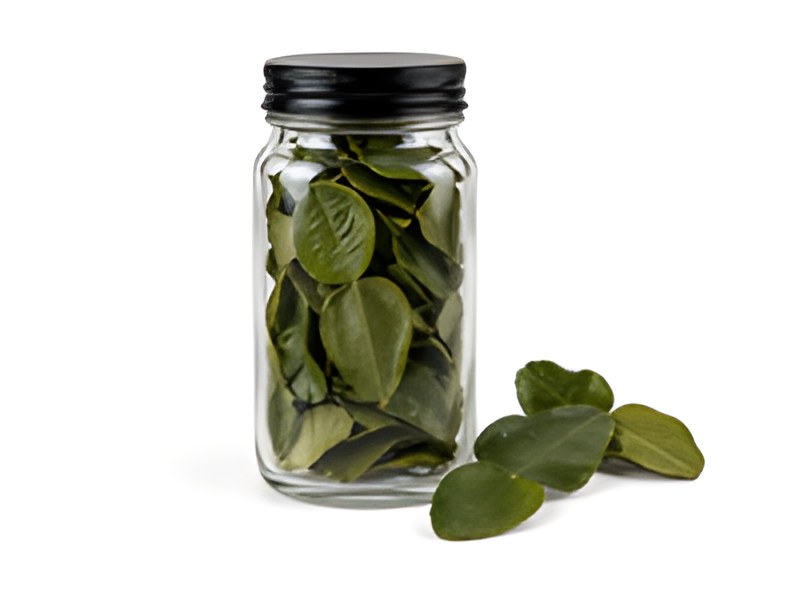
Makrut lime (Citrus hystrix) is a small citrus tree grown mostly for its leaves. You will also see it sold as "kaffir lime"; that older name is being dropped because the word is a racist slur in South Africa (SBS Food, 2021), and in Thailand the tree is called ma kruut (PROSEA). Here's a brief overview of the plant, what is in the leaves, and how to grow one in a pot or a hydroponic setup.
What Makrut Lime Is
Makrut lime is a citrus tree up to 12 m tall in the tropics, with a crooked trunk and short, stiff spines. Its leaves are broadly ovate, its small white flowers are fragrant, and its fruit is a very bumpy green-to-yellow berry 5-7 cm across (PROSEA). Its origin is unknown; it is widely naturalized in Malesia, Sri Lanka and Burma (PROSEA). Grown in a pot it stays much smaller: the RHS gives an eventual height of 2.5-4 m and a spread of 1-1.5 m.
The leaf is the part cooks want. Each one looks like two leaves joined end to end, a "unique double-leaf formation" that is thick, leathery and glossy, 8-12 cm long (Specialty Produce). The fruit juice is used for seasoning and drinks, but PROSEA notes that its major traditional use appears to be as an insecticide against land leeches.
Nutritional Profile of Makrut Lime Leaf
We did not find a USDA FoodData Central record for makrut lime leaves. A 2018 study of the condiment leaves, presented at a chemistry meeting in Porto, Portugal, reported 64.7 g carbohydrate, 17.98 g protein and 12.96 g ash per 100 g. Most of the fat was polyunsaturated (71.5%), led by linolenic acid (55.6%) (Pereira et al., 2018). A few leaves in a pot of soup add very little to a day's food.
Nothing on this page is health or medical advice.
Chemistry of Makrut Lime Leaf
The scent comes from the leaf's essential oil, and it varies a lot from tree to tree. In a 2022 study of trees in the Bogor Botanic Gardens collection, leaf oil from a Central Java tree was 56.99% citronellal and 11.66% citronellol, while oil from an East Sumba tree was 86.06% linalool. The authors cite an earlier East Java sample at 85.07% citronellal (Astuti et al., 2022). So leaves from two different trees can smell noticeably different.
In the Kitchen
Cooks add whole leaves like bay leaves and take them out before serving, or roll and slice them very thin. The tough central rib is removed first. They go into tom yum and other hot and sour soups, curries, fried rice, fish cakes and spice pastes, and pair with lemongrass, galangal, chiles and coconut milk (Specialty Produce). Whole fresh leaves keep about two weeks sealed in the fridge and about a year in the freezer (Specialty Produce).
Hydroponics of Makrut Lime
What the Research Shows
We found no hydroponic study of makrut lime. The closest useful work is from Bogor, Indonesia, where researchers grew five-month-old seedlings under artificial shade and pruning. Mild shade with a 24% light reduction raised leaf production by about 59% over the control, and shade mattered more than pruning. Pruning cut plant height by 8% and raised the number of shoots by 20% (Budiarto et al., 2019). For a leaf crop, that points to bright but not harsh light and regular tip pruning to make a bushy plant.
Growing Citrus Without Soil
Citrus in general can be grown hydroponically. Science in Hydroponics describes a drip system with at least 3 emitters per tree in a 5-gallon container of rice husk, perlite or vermiculite, fed a Hoagland nutrient solution "first at half strength and then at full strength" as the tree grows. Citrus needs high light, so indoors it needs strong LED or HID lamps. Keeping the solution balanced also helps avoid the iron and manganese shortages common in soil-grown citrus (Science in Hydroponics). A makrut lime is a tree, not a tray herb: plan for a single large container, not a tower slot.
Light, Water and Temperature
The RHS rates makrut lime H3, hardy only to about -5 to 1°C, and recommends a container of loam-based compost with added grit, full light shaded from hot sun, and a cool or temperate greenhouse or conservatory, moved outside for the summer. Water freely and mist daily in spring and summer, water sparingly in winter, and feed with a citrus fertiliser year-round (RHS). Yates suggests a grafted tree on a dwarf rootstock in a pot at least 500 mm wide, on wheels in cold areas so it can come indoors (Yates).
Starting a Plant
The RHS lists semi-ripe cuttings in summer, layering in early spring, or seed sown at 16°C in spring. Most home growers start with a grafted nursery tree. In the US, buy citrus plants only from shippers who comply with federal quarantine rules, and don't move homegrown citrus plants or fruit across state lines: citrus greening, spread by the Asian citrus psyllid, has no cure and most infected trees die within a few years (USDA APHIS).
Harvest
Pick leaves as you need them (Yates). Taking a few at a time from the tips doubles as the light pruning that keeps the plant bushy (Budiarto et al., 2019).
Pests and Handling
Under glass, watch for scale insects, mealybugs and red spider mite. Like other limes, the fruit can irritate skin in sunlight, so wear gloves when handling it (RHS). The spines are sharp too (PROSEA).
References
- Astuti, I. P., Palupi, K. D., & Damayanti, F. (2022). Essential oils composition of kaffir lime (Citrus hystrix DC.) collection of Bogor Botanic Gardens from Central Java and East Sumba. Journal of Tropical Biodiversity and Biotechnology, 7(1). Retrieved from https://jurnal.ugm.ac.id/jtbb/article/download/66061/33034
- Budiarto, R., Poerwanto, R., Santosa, E., Efendi, D., & Agusta, A. (2019). Agronomical and physiological characters of kaffir lime (Citrus hystrix DC) seedling under artificial shading and pruning. Emirates Journal of Food and Agriculture, 31(3), 222-230. Retrieved from https://ejfa.me/index.php/journal/article/view/1920
- Jansen, P. C. M., Jukema, J., Oyen, L. P. A., & van Lingen, T. G. (1991). Citrus hystrix DC. In E. W. M. Verheij & R. E. Coronel (Eds.), Plant Resources of South-East Asia No. 2: Edible fruits and nuts. PROSEA. Retrieved from https://prosea.prota4u.org/view.aspx?id=1615
- Lam, L. T. (2021, January 27). Why people now call this lime by its Thai name. SBS Food. Retrieved from https://www.sbs.com.au/food/article/2021/01/27/why-people-now-call-lime-its-thai-name
- Pereira, C., Carvalho, I., Barros, L., & Ferreira, I. C. F. R. (2018). Citrus hystrix L. condimentary leaves: proximate composition, fatty acids and sugars profile. XXIV Encontro Luso Galego de Química, Porto. Retrieved from https://bibliotecadigital.ipb.pt/entities/publication/3f1c5b97-ed80-4542-be91-0fc23fd3ab86/full
- RHS. (n.d.). Citrus hystrix. Royal Horticultural Society. Retrieved from https://www.rhs.org.uk/plants/157902/wd/details
- Science in Hydroponics. (n.d.). Growing citrus trees in a hydroponic garden. Retrieved from https://scienceinhydroponics.com/2009/02/growing-citrus-trees-in-a-hydroponic-garden.html?print=pdf
- Specialty Produce. (n.d.). Makrut lime leaves. Retrieved from https://specialtyproduce.com/produce/leaves/makrut_lime_332.php
- USDA APHIS. (2012). Citrus greening (also called huanglongbing). Program Aid No. 2125-CG. Retrieved from https://www.aphis.usda.gov/sites/default/files/HP-PestCards-CG.pdf
- Yates. (n.d.). How to grow makrut lime. Retrieved from https://www.yates.co.nz/plants/fruits-and-citrus/makrut-lime/how-to-grow-makrut-lime/
Keep reading
Growing Basil Hydroponically
Basil is essentially a herb. But it’s frequently used as a spice in kitchens because of its aroma and peppery taste. Basil is an essential ingredient in Italian and Indian culinary preparations…
Growing Parsley Hydroponically
Native to the eastern Mediterranean region, parsley is now widely used in European and American cuisine. Its leaves are either utilized fresh or dried to form spice. Sometimes, it’s partnered up with…
Growing Thyme Hydroponically
Thyme is a perennial herb that’s rich in nutrition as well as taste. And both these qualities are responsible for their culinary and medicinal uses. Here’s a brief overview of their chemistry…