
Home / The Dirt / Hydroponic herbs / Growing Salad Burnet Hydroponically
Growing Salad Burnet Hydroponically
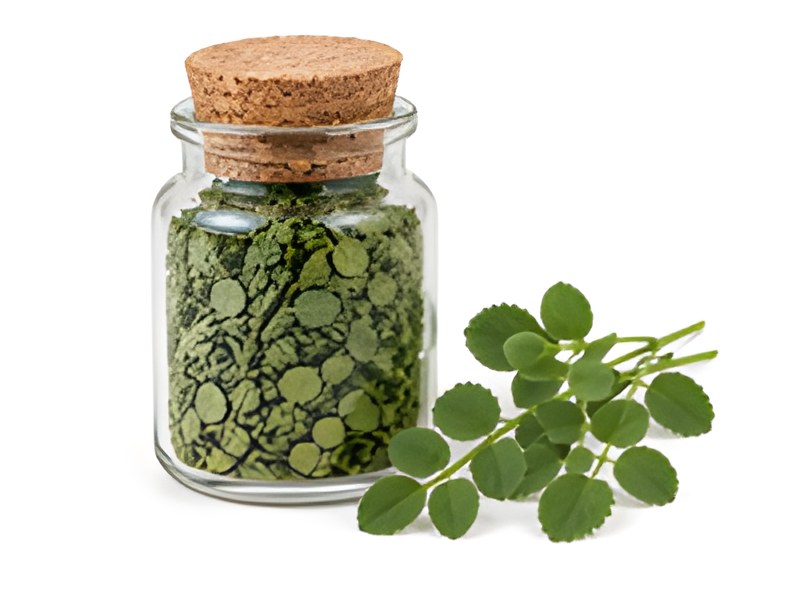
Salad burnet (Sanguisorba minor), also called small burnet or garden burnet, is a low, mounding perennial grown for its small, round, toothed leaves and their fresh cucumber taste. Here's a brief overview of the plant, what is in it, and how to grow it in a hydroponic setup.
What Salad Burnet Is
Unlike most kitchen herbs, salad burnet is not in the mint family: it belongs to the Rosaceae, the rose family, and was once named Poterium sanguisorba (NC State Extension). It is native to Europe, northern Africa, the Canary Islands and Asia, where it grows on dry, poor chalk and limestone grassland. The plant is 9-24 inches tall and 12-24 inches wide, hardy in USDA zones 4a-8b, with a rosette of hairless leaves made of 4-12 pairs of rounded, toothed leaflets. In midsummer it sends up stalks to about 2 feet carrying greenish, purple-tinged flower heads (NC State Extension).
It is a familiar plant in Utah too. Utah State University lists small burnet as an introduced range plant that grows at 5,000-7,000 feet, is frost, cold and drought tolerant, survives on as little as 10 inches of precipitation a year, and generally stays green into winter. It is seeded on western rangelands, burned areas and fire greenstrips, and is valued as sheep and wildlife forage (Utah State University Extension).
Nutritional Profile of Salad Burnet
A search turned up no salad burnet entry in USDA FoodData Central, so there is no standard nutrient panel for it. Utah State University describes the leaves as high in vitamin C, and the St. Louis Herb Society calls the fresh leaves a good source of it, but neither gives a figure.
Two studies measured the plant itself. In a pot trial under Mediterranean growing conditions, the leaves and stems were rich in alpha-linolenic acid (49.4-52.4% of their fat), carried fructose and glucose as their main sugars, and held oxalic and citric acid as their main organic acids (Karkanis et al., 2019). In an Italian hydroponic tray trial, salad burnet had more magnesium, phosphorus, zinc, manganese and molybdenum than the two other wild greens grown beside it, and the most anthocyanins (0.19 mg/g fresh weight) (Lenzi et al., 2019).
Nothing on this page is health or medical advice.
Chemistry of Salad Burnet
What Is in the Leaf
Karkanis et al. (2019) found 23 phenolic compounds in the plant, mostly hydrolysable tannins, with about ten times more phenolic acids in the roots than in the leaves. The growing mix changed the profile: in pure peat, flavonoids led in the leaves instead of tannins. Lenzi et al. (2019) measured nitrate at about 5,200 mg/kg fresh weight, similar to the other leafy greens in their trial.
In the Kitchen
The leaves taste of cucumber with a nutty note and go into salads, soups, vinegars and drinks (University of Illinois Extension). NC State adds butter, cottage cheese, cream cheese and garnishes, and says the flowers are edible too. Burnet is one of the herbs in the French fines herbes mix, and it is better fresh than dried (St. Louis Herb Society). Use young leaves: older ones turn tough and bitter (University of Illinois Extension).
Hydroponics of Salad Burnet
What the Research Shows
Salad burnet is one of the few herbs on this site with a published hydroponic trial. In an Italian trial, Lenzi et al. (2019) sowed it in vermiculite in 392-cell trays sitting on tanks of half-strength Hoagland's solution (EC 1.12 mS/cm, pH 5.56), under fluorescent light for 16 hours a day at 25 °C by day and 17 °C by night. They aimed for about eight plants per cell. Microgreens were ready 16 days after sowing and baby greens, thinned to one plant per cell, at 43 days. Salad burnet was the lowest yielder of the three species tested: about 0.8 kg/m² as microgreens and only 0.2 kg/m² as baby leaves.
One finding matters to anyone growing it this way: the salad burnet microgreens carried lead above the Codex limit (30 µg per 100 g fresh weight). The authors suppose the trace elements came from the mineral fertilizers in the solution and from the vermiculite (Lenzi et al., 2019). In that trial the lead was high only in the microgreens, not the baby greens. Our reading (not a tested rule): use a clean, food-grade medium and fertilizer, and lean toward baby leaves over microgreens.
Growing Mix
The Mediterranean pot trial grew salad burnet in pots of pure peat or peat-perlite mixes. Plants grew best in pure peat and worst in a 1:1 peat-perlite mix (Karkanis et al., 2019). Our reading: the plant does better in a mix that holds water than in a very open one.
Feeding and pH
The only tested solution is the one from the Italian tray trial: half-strength Hoagland's at EC 1.12 mS/cm and pH 5.56 (Lenzi et al., 2019). That was for young plants in trays, so treat it as a starting point for larger plants rather than a tested target. In soil, salad burnet takes acid, neutral or alkaline ground and tolerates alkaline soils (NC State Extension; The Old Farmer's Almanac).
Water and Roots
Sources pull in two directions. Once established the plant tolerates dry conditions (University of Illinois Extension), and Utah State calls it drought tolerant, but waterlogged soil can rot its roots (The Old Farmer's Almanac) and NC State asks for good drainage. In hydroponics that points to a well-aerated system that never leaves the crown sitting in still water. The plant grows a long, stout taproot (Utah State University Extension), so give mature plants a deep pot or bucket.
Light
Give it full sun, 6 or more hours a day (NC State Extension); the Almanac says light shade is fine as long as it gets at least 6 hours of light. Indoors, a grow light on a 16-hour day worked in the Italian tray trial (Lenzi et al., 2019).
Starting a Plant
Seeds need light, so press 2-3 seeds onto the surface and give them only a thin dusting of mix; indoors they sprout in 5-10 days (The Old Farmer's Almanac). Start them 6-8 weeks before the last spring frost under grow lights, and thin to one seedling per pot once true leaves show (The Old Farmer's Almanac). Established plants can also be divided, which Illinois Extension recommends every 3-4 years to keep them vigorous.
Size and Spacing
Space plants at least 12 inches apart (The Old Farmer's Almanac). In containers, use one at least 8 inches wide (The Old Farmer's Almanac).
Harvest
Harvest once plants are at least 4 inches tall; from seed that takes about 70 days, and microgreens can be cut at 10-15 days (The Old Farmer's Almanac). Never take more than a third of the leaves at once (The Old Farmer's Almanac). Pick the tender new growth and use it fresh (University of Illinois Extension).
Keeping It Going
Cut the plant back to push new growth (NC State Extension), and remove flowers as they form: that keeps the leaves coming and stops the plant from reseeding, which it does freely (University of Illinois Extension). NC State reports no serious insect or disease problems.
References
- Karkanis, A. C., Fernandes, Â., Vaz, J., Petropoulos, S., Georgiou, E., Ciric, A., Sokovic, M., Oludemi, T., Barros, L., & Ferreira, I. C. F. R. (2019). Chemical composition and bioactive properties of Sanguisorba minor Scop. under Mediterranean growing conditions. Food & Function, 10(3), 1340-1351. Retrieved from https://pubs.rsc.org/en/content/articlehtml/2019/fo/c8fo02601g
- Lenzi, A., Orlandini, A., Bulgari, R., Ferrante, A., & Bruschi, P. (2019). Antioxidant and mineral composition of three wild leafy species: A comparison between microgreens and baby greens. Foods, 8(10), 487. Retrieved from https://www.mdpi.com/2304-8158/8/10/487/xml
- NC State Extension. Sanguisorba minor (Salad Burnet). North Carolina Extension Gardener Plant Toolbox. Retrieved from https://plants.ces.ncsu.edu/plants/sanguisorba-minor
- St. Louis Herb Society. Burnet. Retrieved from https://www.stlouisherbsociety.org/herbs/favorite_herbs/burnet/
- The Old Farmer's Almanac. Salad Burnet. Retrieved from https://www.almanac.com/plant/salad-burnet
- University of Illinois Extension. Salad Burnet. Retrieved from https://extension.illinois.edu/herbs/salad-burnet
- Utah State University Extension. Small Burnet. Range Plants of Utah. Retrieved from https://extension.usu.edu/rangeplants/forbs-herbaceous/small-burnet.php
Keep reading
Growing Basil Hydroponically
Basil is essentially a herb. But it’s frequently used as a spice in kitchens because of its aroma and peppery taste. Basil is an essential ingredient in Italian and Indian culinary preparations…
Growing Parsley Hydroponically
Native to the eastern Mediterranean region, parsley is now widely used in European and American cuisine. Its leaves are either utilized fresh or dried to form spice. Sometimes, it’s partnered up with…
Growing Thyme Hydroponically
Thyme is a perennial herb that’s rich in nutrition as well as taste. And both these qualities are responsible for their culinary and medicinal uses. Here’s a brief overview of their chemistry…