
Home / The Dirt / Hydroponic herbs / Growing Stevia Hydroponically
Growing Stevia Hydroponically
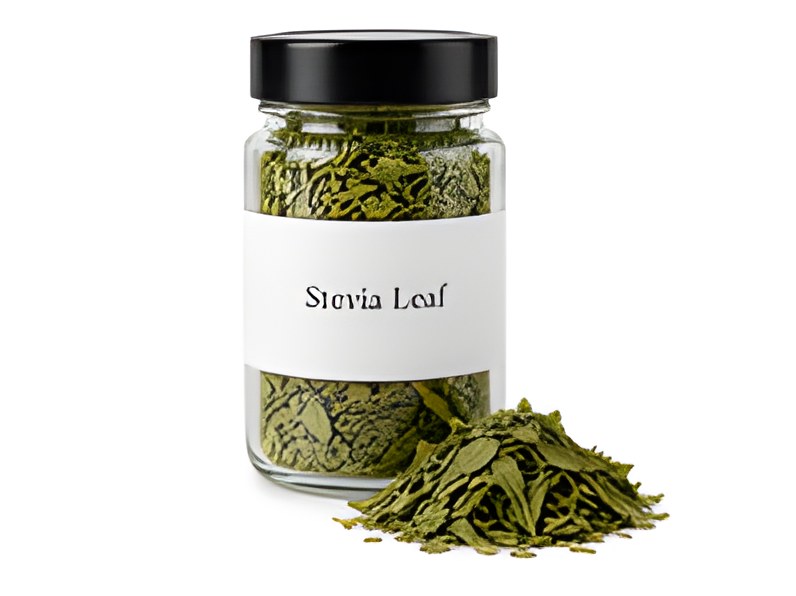
Stevia (Stevia rebaudiana), also sold as "sweetleaf" or "sugarleaf," is a small herb in the sunflower family whose leaves taste sweet. Here's a brief overview of the plant, the chemistry of that sweetness, what hydroponic studies have found, and what it takes to grow and dry your own.
What Stevia Is
Stevia is a slender, upright perennial herb, usually about 50 cm tall in the wild and up to 120 cm in cultivation. Its leaves grow in opposite pairs and are 3-6.5 cm long; its small white, tubular flowers sit in heads of 2-6 (PROSEA). It is native to the Sierra Amambay in north-eastern Paraguay, possibly reaching into neighbouring Bolivia and Brazil, and today is grown mainly in China, Korea and Japan (PROSEA).
In its native South America it is a perennial, but in most of the US it is grown as an annual (University of Kentucky Center for Crop Diversification).
Nutritional Profile of Stevia
USDA FoodData Central lists stevia sweeteners, but we did not find a record for the dried leaf itself. A 2014 laboratory study of dried stevia leaves found 12.4-13.7% protein, 4.2-6.1% fat, 63-74% total carbohydrate and 4.4-5.3% dietary fiber, about 362-384 kcal per 100 g, depending on whether the leaves were dried in the sun, an oven or a microwave (Gasmalla et al., 2014). A pinch of leaf weighs very little, so it adds almost nothing to a day's food.
Nothing on this page is health or medical advice.
Chemistry of Stevia
The sweetness comes from steviol glycosides stored in the leaves. PROSEA lists the main ones by share of leaf dry weight: stevioside about 9% (110-270 times as sweet as sugar), rebaudioside A about 4% (150-300 times), rebaudioside C about 0.8% (40-60 times) and dulcoside A about 0.3% (about 30 times). Dried, ground leaves are about 30 times as sweet as sugar. In taste tests rebaudioside A is preferred, because stevioside has "a slightly bitter aftertaste" (PROSEA).
Leaf vs. Extract in US Food Rules
The leaf in your garden and the white sweetener in a packet are treated differently. In 2008 the FDA issued a "no objection" letter on the GRAS status of rebaudioside A (University of Kentucky CCD). Whole-leaf stevia and crude extracts are not approved as food additives: in letters to companies the FDA has written that "whole-leaf and crude stevia extracts are not approved for food use as a sweetener" (BeverageDaily, 2015). That matters if you plan to sell a stevia product; it does not stop you growing the plant at home.
Hydroponics of Stevia
What the Research Shows
Stevia has been grown in several hydroponic systems, and most studies look at light.
- Nutrient film technique (NFT). A study of the variety Morita II compared three light levels (273, 384 and 441 μmol m⁻² s⁻¹). The brightest level gave the highest photosynthesis rate at both 40 and 90 days and the highest steviol glycoside content (Ventura Zapata et al.). - Ebb and flow in a plant factory. At the University of Plymouth, UK, plants grew in rockwool cubes on a three-tier ebb-and-flow system at 24 ± 2°C, 16 hours of light a day and 160 μmol m⁻² s⁻¹. Six LED mixes made little difference to fresh weight, dry weight or height, but a red-blue mix with UV raised stevioside compared with white light (Aljafer et al., 2025). - Light colour over time. A 2025 hydroponic study under low light (50 μmol m⁻² s⁻¹) found red light gave the heaviest leaves (23.5 g per plant) while green light gave the highest steviol glycoside content (190.7 mg per g) and yield, which the authors call "a trade-off between vegetative growth and SG synthesis" (Chou et al., 2025, reported by Vertical Farm Daily).
Day Length Matters
Stevia is an obligate short-day plant with a critical day length of about 13 hours. With shorter days it can flower 50-60 days after sowing, and long days favour leaf production (PROSEA). Since the sweetest leaves come just before flowering and sugar levels fall after it (University of Kentucky CCD), indoor growers can keep the lights on for 14 hours or more to hold plants in leafy growth. The Plymouth team used 16 hours (Aljafer et al., 2025).
Climate and Nutrients
Stevia comes from a warm, humid climate averaging 24°C. Seed germinates best at 20°C, and growth is "severely retarded" below 15°C (PROSEA). It has low nutrient needs, and too much nitrogen causes "profuse growth and poor flavor" (University of Kentucky CCD), so a mild herb-strength solution is a sensible start. Wild plants grow in acidic soil (pH 4-5) but do well at pH 6.5-7.5 (PROSEA).
Seeds or Cuttings
Stevia seed germinates poorly; only black or dark seeds are viable, and seed to transplant takes about 7-8 weeks (University of Kentucky CCD). Light helps germination, which takes 2-7 days (PROSEA). Cuttings are more reliable and keep the same sweetness profile as the parent: stem cuttings with 4-5 nodes can reach 100% rooting in about 17 days under high humidity (PROSEA). For a hydroponic system, a rooted cutting or nursery plant is the easiest start.
Harvest and Drying
Commercial growers take the first harvest about 2 months after planting and then cut every month, leaving at least 15 cm of stem, since lower cuts kill many plants. A planting can keep producing for 5-6 years (PROSEA). Dry the stems with low heat and good airflow for 24-48 hours, strip the leaves and store them airtight (University of Kentucky CCD).
Pests
In greenhouses, aphids, thrips and whiteflies can be serious (University of Kentucky CCD), so check the undersides of leaves on indoor plants.
References
- Aljafer, N., Alrajhi, A., Anderson von Trampe, T., Vevers, W., Fauset, S., & Rihan, H. Z. (2025). The impact of LED light spectra on the growth, yield, physiology, and sweetness compound of Stevia rebaudiana. Biology, 14(2), 108. Retrieved from https://www.mdpi.com/2079-7737/14/2/108
- BeverageDaily. (2015, August 19). FDA warning letter reminds industry whole stevia leaf is not GRAS or an approved food additive. Retrieved from https://www.beveragedaily.com/Article/2015/08/19/FDA-tells-industry-whole-stevia-leaf-isn-t-GRAS-approved-food-additive
- Gasmalla, M. A. A., Yang, R., Amadou, I., & Hua, X. (2014). Nutritional composition of Stevia rebaudiana Bertoni leaf: effect of drying method. Tropical Journal of Pharmaceutical Research, 13(1), 61-65. Retrieved from https://tjpr.org/vol13_no1/2014_13_1_9.php
- Kaiser, C., & Ernst, M. (2017). Stevia (CCD-CP-55). University of Kentucky Center for Crop Diversification. Retrieved from https://ccd.uky.edu/sites/default/files/2024-11/ccd-cp-055_stevia.pdf
- PROSEA. (n.d.). Stevia rebaudiana. Plant Resources of South-East Asia. Retrieved from https://prosea.prota4u.org/view.aspx?id=596
- Vertical Farm Daily. (2025, March 17). Effects of light conditions on the leaf growth of stevia (Chou, C.-T., Christabel, V., Le, M., Tsai, M.-L., & Wang, S.-T., Horticulturae 11, 316). Retrieved from https://www.verticalfarmdaily.com/article/9714450/effects-of-light-conditions-on-the-leaf-growth-of-stevia
- Ventura Zapata, E., Brito Uribe, G., Sánchez Rivera, M. M., Nava Juárez, R. A., Méndez Tinajero, M., Sánchez Muñoz, J., & Tapia Barrera, N. P. (n.d.). Effect of level of PFD on photosynthetic parameters and production of steviol glycosides by hydroponic culture from Stevia rebaudiana Bertoni. International Journal of Agriculture and Environmental Research, 9(3). Retrieved from https://ideas.repec.org/a/ags/ijaeri/338414.html
Keep reading
Growing Basil Hydroponically
Basil is essentially a herb. But it’s frequently used as a spice in kitchens because of its aroma and peppery taste. Basil is an essential ingredient in Italian and Indian culinary preparations…
Growing Parsley Hydroponically
Native to the eastern Mediterranean region, parsley is now widely used in European and American cuisine. Its leaves are either utilized fresh or dried to form spice. Sometimes, it’s partnered up with…
Growing Thyme Hydroponically
Thyme is a perennial herb that’s rich in nutrition as well as taste. And both these qualities are responsible for their culinary and medicinal uses. Here’s a brief overview of their chemistry…