
Home / The Dirt / Hydroponic herbs / Growing Winter Savory Hydroponically
Growing Winter Savory Hydroponically
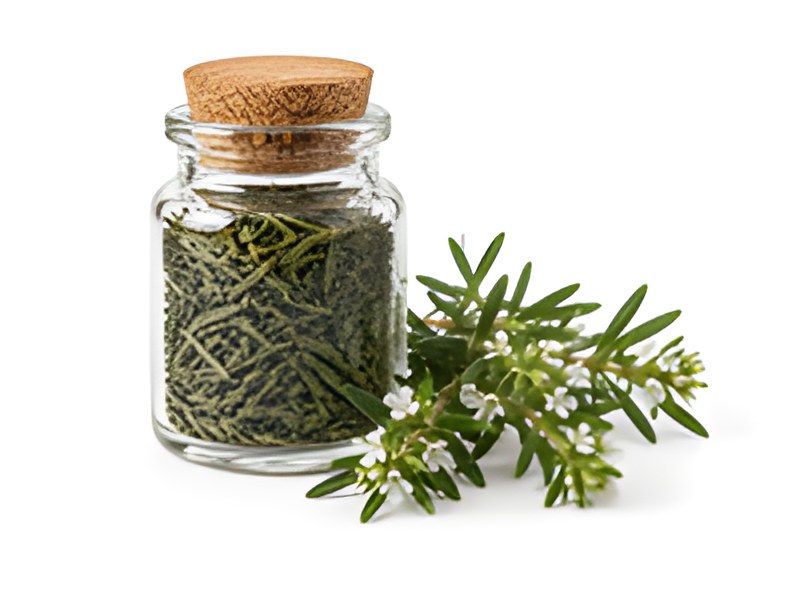
Winter savory (Satureja montana), also called mountain savory, is a low, shrubby, evergreen herb from the mint family, grown for its stiff, glossy leaves and their sharp, peppery taste. Here's a brief overview of the plant, what is in it, and how to grow it in a hydroponic setup.
What Winter Savory Is
Winter savory belongs to the Lamiaceae, the mint family. NC State Extension describes it as a perennial, low and shrubby herb, native to southwestern Asia and southern Europe, about 6-18 inches tall and 12-18 inches wide, hardy in USDA zones 5a-10b. Its leaves are dark green, glossy, stiff and narrow, up to 1 inch long, in opposite pairs, and its small flowers (blue, lavender or white) open from June to August and draw bees and butterflies (NC State Extension). In the wild it grows on old walls, dry banks and rocky hillsides, usually on lime-rich ground (PFAF).
Next to summer savory, its annual cousin, winter savory is much stiffer in form and much more pungent in flavor, and it becomes woody with age (University of Illinois Extension). The leaves can turn maroon in cold weather (Quackin' Grass Nursery).
Nutritional Profile of Winter Savory
USDA FoodData Central lists ground savory (SR Legacy, FDC 170936) but does not say which savory species it is. Per 100 g of the dried, ground herb it gives 272 kcal, 6.73 g protein, 5.91 g fat, 68.7 g carbohydrate and 45.7 g fiber, with 2,132 mg calcium, 37.9 mg iron, 377 mg magnesium, 1,051 mg potassium, 6.10 mg manganese, 257 µg vitamin A (RAE) and 50.0 mg vitamin C (USDA FDC via GetFoodFacts). Treat these as "savory" numbers, not winter-savory-only numbers.
Keep the serving in mind: a recipe uses a pinch to a teaspoon of dried savory, not 100 g, so these numbers describe the herb, not a day's food.
Nothing on this page is health or medical advice.
Chemistry of Winter Savory
What Gives It Its Bite
Winter savory's oil is dominated by carvacrol, the same peppery compound found in oregano, with thymol behind it. In a field crop in south-eastern Poland, the oil made up 1.63-2.20% of the herb around flowering, and carvacrol made up 60.97-73.54% of the oil at the onset and peak of flowering (Zawiślak & Zalewska, 2025). Wild plants on the Croatian island of Brač yielded 0.7-1.9% oil, with carvacrol falling from 52.4% before flowering to 16.1% after it (Bezić & Dunkić, 2002). A Spanish line bred over four seasons was also a carvacrol/p-cymene type (Navarro-Rocha et al., 2020).
USDA's phytochemical database lists dozens of other minor compounds in the plant, among them 1,8-cineole, alpha-pinene and alpha-terpineol (USDA Phytochemical and Ethnobotanical Databases, citing Duke 1992).
The practical lesson from the Polish and Croatian work: the flavor compounds peak around flowering, so that is when to cut for drying.
In the Kitchen
The leaves are eaten raw or cooked, with a peppery, marjoram-like flavor that is stronger and sharper than summer savory's, and they are used above all with beans (PFAF; University of Illinois Extension). NC State lists meat, fish, salads, soups, stews and sausage, and notes the flowers are edible with a spicy, peppery taste.
Hydroponics of Winter Savory
What the Research Shows
We found no published study of winter savory grown in a hydroponic system. The closest controlled work is a salinity trial: plants irrigated with water at 4 dS/m grew shorter, branched less and gave less herb and oil than plants on tap water at 0.4 dS/m, and adding calcium, ammonium or sulfate salts reduced those losses (Hegazy et al., 2019). Our reading (not a tested target): keep the nutrient solution moderate and do not let salts build up.
How you start the plant matters. In a Polish trial, plants set out as seedlings gave a higher fresh and dry herb yield than plants grown from cuttings, with the same oil content, so they gave more oil overall (Zawiślak & Nurzyńska-Wierdak, 2017).
Feeding and pH
No published EC or pH target exists for winter savory. The nearest tested relative is sage, another woody mint-family herb: in Iowa State deep-water-culture trials at EC 2.0 mS/cm, sage did best at pH 6.0 and grew well from 5.5 to 6.5 (Kramer, Currey & Boldt, Produce Grower). That is a sage result, not a savory one, but it is a reasonable starting point. In soil, winter savory takes acid, neutral or alkaline ground and is happiest on lime (NC State Extension; PFAF), so there is no reason to run the solution acidic.
Roots Need Air
Every source agrees on one thing: winter savory hates wet feet. It rots in poorly drained spots over winter (University of Illinois Extension), does poorly in damp soil (NC State Extension), and is less hardy in rich or wet conditions (PFAF). In hydroponics that means well-aerated roots: an ebb-and-flow tray, a drip-fed media bed or a strongly aerated bucket suits it better than a still, warm reservoir.
Light
Give it full sun, 6 or more hours a day; it tolerates light shade but not deep shade (NC State Extension). Indoors, that means a strong grow light.
Starting a Plant
Seed is sown on the surface and pressed in, not covered; it germinates in 14-30 days at 65-70 °F soil temperature and does best started indoors, 6-8 weeks before the last frost (Superseeds). PFAF notes germination can be slow and erratic but usually comes within a month. Cuttings of 5-8 cm, taken at a node from half-ripe wood in July or August, also root (PFAF), and NC State lists both seed and stem cuttings.
Size and Spacing
Seed-shop spacing is 8-12 inches for a 9-12 inch mound (Superseeds); the Polish field trial used 30 × 30 cm (Zawiślak & Zalewska, 2025). In a tray, give each plant a full site of its own.
Harvest
Start snipping when the plant is about 6 inches tall, taking only the tips so it keeps branching (Superseeds). For the best flavor, harvest just before flowering (PFAF). Dry by hanging bundled stems in a warm, dark, airy place or using a dehydrator (Superseeds), and store dried leaves in closed containers (University of Illinois Extension). NC State says it can be harvested within about 2 months of sowing.
Keeping It Going
The plant gets woody and slows down as it ages. Remove woody stems to push fresh growth (University of Illinois Extension), cut it back every couple of years to keep it compact (Quackin' Grass Nursery), and plan to replace it about every two years (NC State Extension; PFAF). NC State reports no known disease or insect problems.
References
- Bezić, N., & Dunkić, V. (2002). Chemical composition and seasonal variations of Satureja montana L. and S. cuneifolia Ten. essential oils from Brač island. Abstracts of the Symposium Flora and Vegetation in Changing Environment, Maribor, p. 6. Retrieved from https://www.bib.irb.hr/133550
- GetFoodFacts. Spices, savory, ground (USDA FoodData Central, SR Legacy, FDC 170936). Retrieved from https://getfoodfacts.com/food/spices-savory-ground-170936
- Hegazy, M. H., Sabra, A. S., Alharbi, B. M., Said-Al Ahl, H. A. H., Astatkie, T., Grulova, D., & Abdelrazik, T. M. (2019). Ameliorative effects of supplemental nutrition on growth and essential oil yield of saline irrigated Satureja montana. Journal of Essential Oil-Bearing Plants, 22(5), 1218-1227. Retrieved from https://agris.fao.org/search/ar/records/65df5e7663b8185d9cac8099
- Kramer, H. L., Currey, C. J., & Boldt, J. K. pH optima: Determining the optimal pH for hydroponic herb production in controlled environments. Produce Grower. Retrieved from https://www.producegrower.com/article/hydroponic-herb-production-optimal-ph-controlled-environment-agriculture-cea
- Navarro-Rocha, J., Andrés, M. F., Díaz, C. E., Burillo, J., & González-Coloma, A. (2020). Composition and biocidal properties of essential oil from pre-domesticated Spanish Satureja montana. Industrial Crops and Products. Retrieved from https://agris.fao.org/search/en/records/65de1fca4c5aef494fda193b
- NC State Extension. Satureja montana (Mountain Savory). North Carolina Extension Gardener Plant Toolbox. Retrieved from https://plants.ces.ncsu.edu/plants/satureja-montana/common-name/mountain-savory/
- Plants For A Future. Satureja montana (Winter Savory). Retrieved from https://pfaf.org/user/Plant.aspx?LatinName=Satureja+montana
- Quackin' Grass Nursery. Satureja montana. Retrieved from https://www.quackingrassnursery.com/plant/Satureja-montana
- Superseeds. Winter Savory. Retrieved from https://superseeds.com/products/winter-savory
- University of Illinois Extension. Savory: Winter. Retrieved from https://extension.illinois.edu/herbs/savory-winter
- USDA Phytochemical and Ethnobotanical Databases. Satureja montana. Retrieved from https://phytochem.nal.usda.gov/node/6438
- Zawiślak, G., & Nurzyńska-Wierdak, R. (2017). Plant morphological parameters and yield of winter savory depending on the method of plantation establishment. Acta Scientiarum Polonorum Hortorum Cultus, 16(4), 153-160. Retrieved from https://czasopisma.up.lublin.pl/asphc/article/view/2359
- Zawiślak, G., & Zalewska, E. D. (2025). Seasonal and phenological dynamics of essential oil constituents in cultivated Satureja montana L. Acta Scientiarum Polonorum Hortorum Cultus, 24(6), 97-107. Retrieved from https://czasopisma.up.lublin.pl/asphc/article/view/5582
Keep reading
Growing Basil Hydroponically
Basil is essentially a herb. But it’s frequently used as a spice in kitchens because of its aroma and peppery taste. Basil is an essential ingredient in Italian and Indian culinary preparations…
Growing Parsley Hydroponically
Native to the eastern Mediterranean region, parsley is now widely used in European and American cuisine. Its leaves are either utilized fresh or dried to form spice. Sometimes, it’s partnered up with…
Growing Thyme Hydroponically
Thyme is a perennial herb that’s rich in nutrition as well as taste. And both these qualities are responsible for their culinary and medicinal uses. Here’s a brief overview of their chemistry…